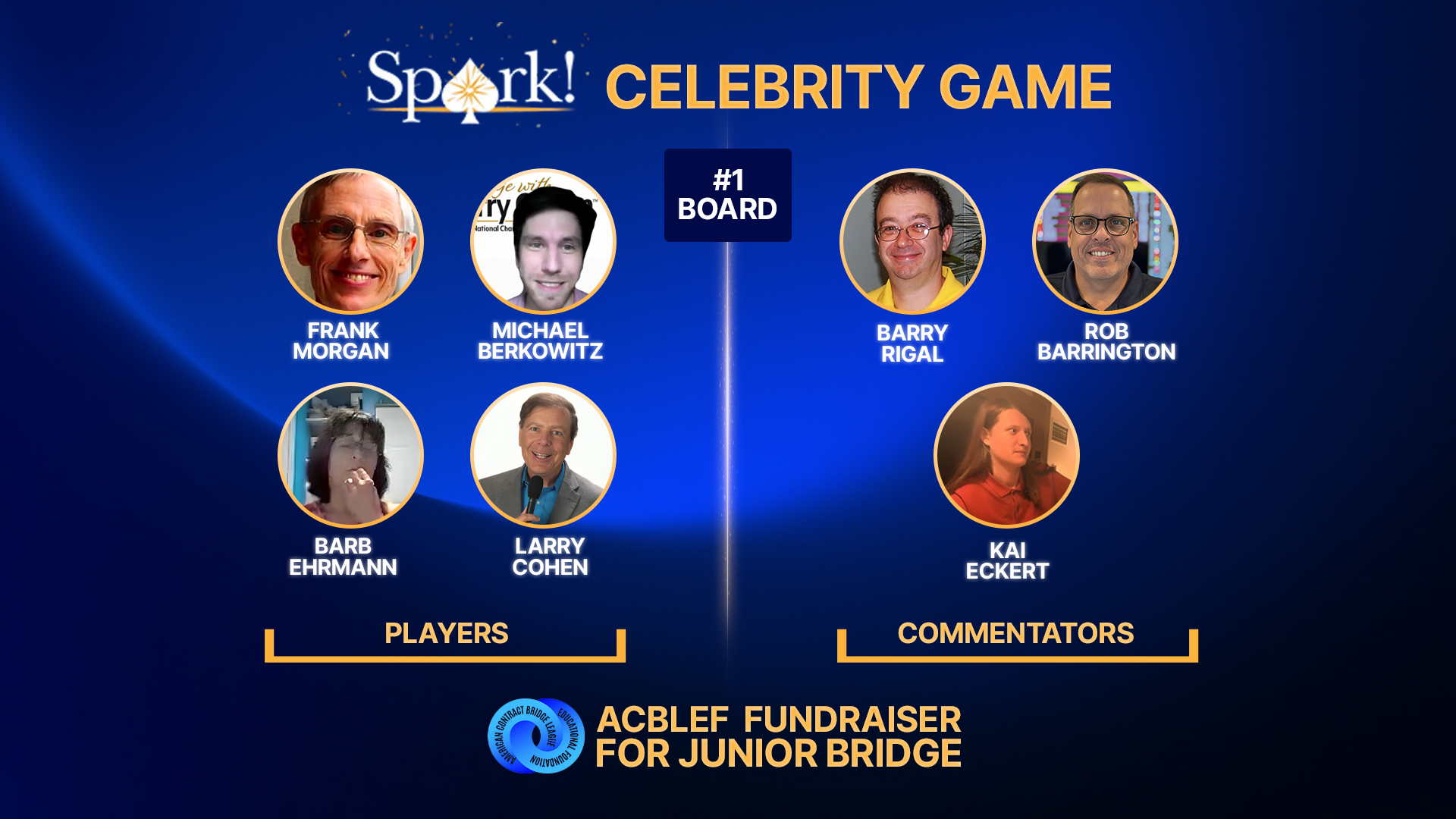
Inside the Spark Auction Bridge Event: Expert Commentary, Strategy, and Community Spirit
Welcome to an inside look at the recent Spark Auction bridge event—a gathering that brought together some of the top minds in contract bridge, all in the name of friendly competition and the greater good. As someone who had the privilege of watching events unfold firsthand (albeit not as a player, but as an engaged observer and commentator), I’m excited to share the highlights, the strategies, and the sheer joy that filled this room. Supported by the American Contract Bridge League’s Educational Foundation, this event did more than test bidding and defensive skills—it strengthened the bonds within our bridge community while raising funds for junior bridge programs. Let’s jump into what made the Spark Auction such a memorable occasion.
The Commentary Dream Team
For the first three boards, viewers were treated to live commentary by the exceptional trio of Barry Rigal, Rob Barrington, and Bronia Jenkins. From the outset, the ethos was clear: insightful analysis, never criticism. This approach fostered a safe, collaborative space where tough decisions and triumphs could be discussed openly, all while respecting the players making those choices under pressure.
Barry and Rob, both renowned for their strategic acumen, peppered the event with clever observations and genuine encouragement.
Bronia balanced the technical talk with gentle humor, helping even novice viewers feel right at home.
Whether you were a player listening in or an audience member at home, it was obvious you were in good hands.
A Festive and Supportive Atmosphere
Bridge events can be as competitive as they are collegial, and the Spark Auction was no exception. Early on, the gratitude for volunteers and participants was palpable—this wasn’t just another game night; it was a community gathering for a cause. Jokes about family rivalries, playful banter about betting on outcomes (“How do I bet on Larry Cohen?”), and running commentary on seating arrangements and family hierarchies brought a refreshing levity.
This spirit of camaraderie extended beyond the players to the production team and volunteers behind the scenes. Whether starting precisely on time (or close to it!) or managing “last-minute players,” everyone’s effort was acknowledged. There was a true sense that, regardless of the outcome on the scoreboard, simply being present and participating was something to be celebrated.
In-Depth Board Analysis
When it comes to bridge, the devil is in the details—and the commentary team didn’t disappoint on this front. Let’s take a closer look at the key insights from the early boards:
Bidding Battles and Contract Conundrums
Opening Moves: The action often began with North’s strong 18-point hand and a standard one diamond opening. Common continuations included a one no-trump response and, in many instances, escalation to three no-trump.
Strategic Dilemmas: One recurring theme was the challenge of selecting the right contract—should you settle for three no-trump or aim for a minor suit game in clubs or diamonds? Much depended on subtle cues and, occasionally, a bit of luck.
Defensive Decisions: The value (and risk) of an opening spade lead was hotly debated. In one memorable board, leading a spade proved crucial—potentially staving off an otherwise unstoppable squeeze or letting declarer discard vital losers.
The Art of the Squeeze and Tactical Play
Illustrative Example: Analysis of a tricky hand revealed that five clubs from the South seat could threaten a sophisticated squeeze play, forcing defenders to cash a spade or risk being squeezed in spades and diamonds. The discussion highlighted not just what happened, but why—helping viewers learn from each nuanced move.
Credit Where Due: The commentators were quick to recognize good defense (“Credit to Fred for leading a spade rather than a heart”) and to suggest alternative lines of play without second-guessing the players.
Humor Amidst the Tension: Even complex squeezes became points of laughter. As one quip went: “We don’t talk about squeezes … unless we’re talking about Lisa!”—infusing the play-by-play with warmth and wit.
Players, Partnerships & Family Stories
No bridge recap would be complete without a nod to the colorful cast at the tables. From legends like Larry Cohen to fan favorites like Lisa Berkowitz (whose impressive 93% score was met with pride and applause), the human stories were as compelling as the card play.
Anecdotes abounded—like commentary on “the greater Berkowitz family tree,” the creative ways families paired up, and good-natured ribbing about past competitive encounters. Partnerships were tracked, scores celebrated, and a sense of continuity within the bridge world shone through, especially as many players had recently faced off in high-level events.
The Flow of the Event & Community Engagement
What truly set the Spark Auction apart was the inclusive, receptive nature of the occasion:
Open Q&A: Viewers were encouraged to ask questions throughout, reinforcing the event’s educational mission.
After-Show Invitation: Everyone was invited to participate in the after-show, emphasizing that bridge is about learning and connecting, not just winning.
Managing the Unpredictable: The team handled slow tables, unexpected pairings, and the quirks of remote participation (like Kevin Rosenberg’s mysterious missing partner) with flexibility and good humor.
Gratitude and Final Thoughts
Events like this only happen thanks to the tireless work of many. Organizers Tracey, Ladawna, Kai, and of course Barry—whose lightning-quick hand analysis brought hands to life—each received heartfelt thanks. The praise extended to every volunteer and participant who helped create a space where bridge could be enjoyed, celebrated, and advanced as a game for all ages.
In the end, the Spark Auction event was everything a bridge fan (or newcomer) could hope for: fun, instructional, and filled with community spirit. The lessons learned, laughs shared, and funds raised for the next generation of bridge players all wrapped up into a single, unforgettable night.
Conclusion
If you missed attending the Spark Auction in person or online, don’t worry—the lessons and spirit endure. Events like these prove that bridge is much more than a card game: it’s a living, breathing community where everyone, from seasoned pros to curious beginners, has a seat at the table.
I invite you to join upcoming events, get involved with the Educational Foundation’s initiatives, and—most of all—enjoy the game. Bridge has something for everyone, and as the Spark Auction has shown, it’s at its best when we learn, laugh, and play together.
Bridge, explained without the gatekeeping.
Every post here comes from the same place the workshops do, championship-level bridge taught in plain English. Here is what you will find:

Conventions, Explained
The bidding tools tournament players rely on, taken one at a time. Stayman, Jacoby Transfers, Negative Doubles, Weak Two Bids, and the rest of the fifty. Each one in plain English, with the hands that show you why it works.

Play and Defense
How to plan a hand before you play to trick one, count the room, and read your partner’s signals. These are the skills that turn a decent bidder into a player who brings the contract home.

Stories From the Table
World champions, legendary partnerships, and the culture of the game. Interviews and tournament coverage you will not find anywhere else, from someone who plays in the events.

Start From Zero
Never held thirteen cards before? Start with the glossary and the beginner guides. No jargon, no judgment, no club politics. Everybody starts somewhere and nobody here will make you feel it.

About Me
CHAMPIONSHIP BRIDGE, TAUGHT FOR TODAY
Two-time World Bridge Federation Women’s Spring Festival Champion, 2020 and 2022
Lifetime Platinum Member, over 200 platinum points, a rare distinction
Member of the American Contract Bridge League, the United States Bridge Federation, and the World Bridge Federation
Teaching bridge the way tournament players actually play it, with no gatekeeping and no jargon
Let’s make the game click, together.