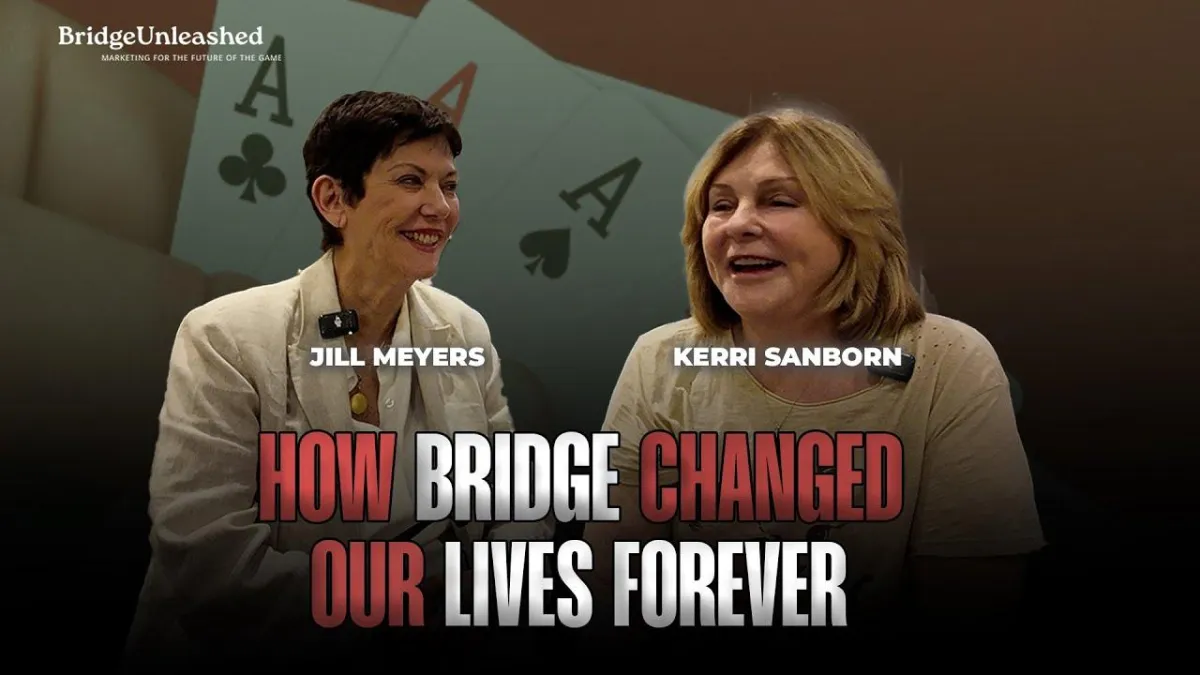
Reflections on a Lifetime of Bridge: Insights from Kerri Sanborn and Jill Meyers at the Lifemaster Pairs
A Conversation Worth Remembering
As a devoted fan of contract bridge, I recently had the privilege of hearing a powerful conversation between two of the most accomplished women in the game: Kerri Sanborn and Jill Meyers. The interview, recorded during Day 3 of the prestigious Lifemaster Pairs tournament in Philadelphia, wasn’t just a highlight reel of wins. It was a soulful reflection on their paths to excellence, the people who shaped them, and the many ways bridge has enriched their lives.
Whether you’re a newcomer or a seasoned competitor, their stories will move and inspire you.
Early Days: How They Found the Game
Kerri Sanborn began her bridge journey in the late 1960s, though she was surrounded by the game much earlier. Her parents were avid players, but she initially avoided it, calling it a “waste of time.” It wasn’t until college at Miami University of Ohio—after dabbling in hearts and pinochle—that a friend finally introduced her to bridge. That spark ignited a passion that would span more than 50 years.
Jill Meyers, by contrast, started much earlier—at age 10. Her household was full of card games, though not bridge. When her sister returned from college and brought the game home, Jill quickly joined in. It started as “kitchen bridge,” but her interest soon grew into something much deeper.

The Power of Mentorship
Both women attribute much of their success to exceptional mentors.
For Kerri, that mentor was Barry Crane—a matchpoint legend and a TV and film producer in Hollywood. Kerri and Barry partnered for over 14 years, and during that time, he became both a guide and a close friend. Barry had a set of signature “rules” for card play and an ambitious, almost theatrical, style of competing. His tragic passing in 1985 was a blow to the entire bridge community, and Kerri still remembers the moment she received the call from the police. For years afterward, she dreamed about him.
Jill’s first major mentor was Ed Davis, her boyfriend at the time. He was patient and insistent on fundamentals, which proved invaluable. Later, John Mohan became a key influence, helping Jill shift from competent play to true strategic mastery.
Career Highlights & Memorable Victories
Kerri’s most cherished win came in 1978, when she and Barry Crane captured the World Mixed Pairs Championship. They weren’t the favorites—betting odds were against them—but they won by an incredible margin of three and a half boards.
Jill’s favorite victory was the 1999 Blue Ribbon Pairs, where she partnered with John Mohan. It was a thrilling achievement that cemented her place among the game’s elite.
They also paid tribute to the late Mike Smolen, a beloved teammate and friend known for his humor, humility, and immense skill. His motto—“Be the weakest player on every team”—spoke volumes about his character.


Bridge Beyond the Table
In retirement, Kerri plays bridge on her own terms—when and where she wants. Jill, who was a full-time professional until 2001, remains deeply involved in the bridge world and its community.
To both women, bridge is far more than a competitive pursuit. It has offered lifelong friendships, global travel, and intellectual challenge. Jill calls bridge her “education,” while Kerri notes how it made the world feel smaller—creating instant connection with strangers in faraway places, all brought together by a shared love of the game.
They’ve broken bread with fellow players across Europe and built lasting bonds that transcend borders. The bridge table, they say, is a place of belonging.

Lifelong Learning & Humility
If there’s one message Kerri and Jill want players to take to heart, it’s this: bridge is a humbling game. No matter how long you’ve played or how much you’ve won, there is always more to learn.
Their advice to beginners? Find a mentor. Learn the fundamentals. Stay curious. And be patient. Mastery comes not just from playing, but from learning and reflecting.

Final Thoughts: More Than a Game
Listening to Kerri Sanborn and Jill Meyers share their stories was a reminder that bridge is more than cards and contracts—it’s a lifelong journey of growth, friendship, and discovery.
For those just starting out or considering the game, their message is clear: Embrace the challenge. Welcome mentorship. Stay humble. And cherish the people you meet along the way.
Because in the end, the greatest rewards in bridge aren’t trophies. They’re the stories, the mentors, and the moments you never forget.
Bridge, explained without the gatekeeping.
Every post here comes from the same place the workshops do, championship-level bridge taught in plain English. Here is what you will find:

Conventions, Explained
The bidding tools tournament players rely on, taken one at a time. Stayman, Jacoby Transfers, Negative Doubles, Weak Two Bids, and the rest of the fifty. Each one in plain English, with the hands that show you why it works.

Play and Defense
How to plan a hand before you play to trick one, count the room, and read your partner’s signals. These are the skills that turn a decent bidder into a player who brings the contract home.

Stories From the Table
World champions, legendary partnerships, and the culture of the game. Interviews and tournament coverage you will not find anywhere else, from someone who plays in the events.

Start From Zero
Never held thirteen cards before? Start with the glossary and the beginner guides. No jargon, no judgment, no club politics. Everybody starts somewhere and nobody here will make you feel it.

About Me
CHAMPIONSHIP BRIDGE, TAUGHT FOR TODAY
Two-time World Bridge Federation Women’s Spring Festival Champion, 2020 and 2022
Lifetime Platinum Member, over 200 platinum points, a rare distinction
Member of the American Contract Bridge League, the United States Bridge Federation, and the World Bridge Federation
Teaching bridge the way tournament players actually play it, with no gatekeeping and no jargon
Let’s make the game click, together.