
Boost Decision-Making & Cognitive Skills with Bridge
Playing bridge isn't just a pastime; it's a powerful tool for enhancing decision-making skills and cognitive resilience. This strategic card game demands continuous analysis, strategic planning, and adaptability, all of which contribute to reducing decision fatigue in daily life.
Understanding Decision Fatigue
Decision fatigue refers to the deteriorating quality of decisions after a long session of decision-making. In our fast-paced world, professionals often face a barrage of choices, leading to mental exhaustion and impaired judgment. Engaging in activities that train the brain to handle decisions efficiently can mitigate this fatigue.
Bridge: A Cognitive Workout
Each hand in bridge presents a unique set of challenges: evaluating your hand's strength, predicting opponents' moves, and coordinating with your partner. This constant engagement requires players to:
Analyze Information: Assess the distribution of cards and potential plays.
Strategize: Plan several moves ahead, considering various possible scenarios.
Adapt: Modify strategies based on opponents' actions and emerging information.
Such mental exercises enhance cognitive functions, including memory, problem-solving, and critical thinking. Regularly playing bridge can lead to improved real-time decision-making and better assessment of situations, both in the game and in real-life scenarios.
Real-World Applications
The skills honed at the bridge table are transferable to various professional settings:
Business Leadership: Effective leaders analyze complex situations, strategize for future outcomes, and adapt to changing environments—paralleling the strategic thinking in bridge.
Medical Field: Healthcare professionals make critical decisions under pressure, requiring the analytical and adaptive skills that bridge cultivates.
Education: Educators develop lesson plans and adjust teaching methods based on student needs, reflecting the planning and adaptability inherent in bridge.
Enhancing Emotional Well-being
Beyond cognitive benefits, bridge offers emotional advantages. The game encourages social interaction, teamwork, and communication, contributing to overall emotional well-being. Engaging in such mentally stimulating activities can also reduce stress and provide a sense of accomplishment.
Incorporating bridge into your routine is more than entertainment; it's an investment in your cognitive and emotional health. By challenging your mind and enhancing decision-making abilities, bridge serves as a valuable tool for personal and professional development.
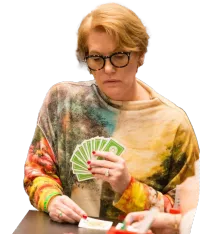
Bridge, explained without the gatekeeping.
Every post here comes from the same place the workshops do, championship-level bridge taught in plain English. Here is what you will find:

Conventions, Explained
The bidding tools tournament players rely on, taken one at a time. Stayman, Jacoby Transfers, Negative Doubles, Weak Two Bids, and the rest of the fifty. Each one in plain English, with the hands that show you why it works.

Play and Defense
How to plan a hand before you play to trick one, count the room, and read your partner’s signals. These are the skills that turn a decent bidder into a player who brings the contract home.

Stories From the Table
World champions, legendary partnerships, and the culture of the game. Interviews and tournament coverage you will not find anywhere else, from someone who plays in the events.

Start From Zero
Never held thirteen cards before? Start with the glossary and the beginner guides. No jargon, no judgment, no club politics. Everybody starts somewhere and nobody here will make you feel it.

About Me
CHAMPIONSHIP BRIDGE, TAUGHT FOR TODAY
Two-time World Bridge Federation Women’s Spring Festival Champion, 2020 and 2022
Lifetime Platinum Member, over 200 platinum points, a rare distinction
Member of the American Contract Bridge League, the United States Bridge Federation, and the World Bridge Federation
Teaching bridge the way tournament players actually play it, with no gatekeeping and no jargon
Let’s make the game click, together.