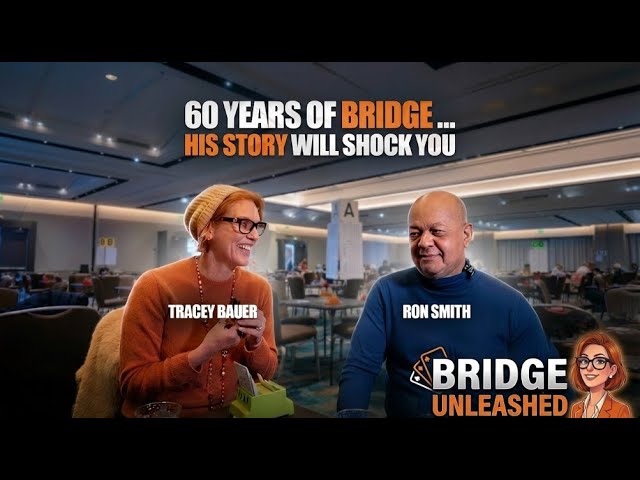
Life, Bridge, and Breaking Barriers: My Journey as Ron Smith
When I first sat down at the piano as a three-year-old, I never imagined how that instrument would shape not only my life but also pave my way into the world of competitive bridge. My journey has been woven with rich notes from my mother’s church music, accidental discoveries, roadblocks of segregation, and the joy of mentoring rising talent. Looking back, I see a story defined by persistence, curiosity, and the enduring power of community. Today, I want to share that story with you—from early musical beginnings to breaking barriers in the bridge world and beyond.
From the Church Pew to the Piano Bench
Growing up in St. Louis, my earliest memories are inseparable from music. My mother was deeply committed to our church, and while some kids might squirm during sermons, I found solace in the joyful melodies of the choir. It wasn’t long before people noticed me tinkering with the piano after services, which quickly resulted in formal lessons. That discipline, focus, and the thrill of tackling new challenges would become the cornerstones of my life—in both music and bridge.
A Teenage Discovery: The Accidental Bridge Player
My introduction to bridge was as unexpected as it was fateful. At the age of 13, I got my hands on a book by accident—Charles Goren’s Championship Bridge. I had caught glimpses of his television series, but the world the book opened felt entirely new. Little did I know, that mistaken purchase would start me on a path that would change my life. Playing bridge, I discovered an intellectual puzzle every bit as thrilling as my music.
How Music Trained My Mind for Bridge
There’s a surprising harmony between piano and bridge. At their core, both demand intense concentration, rhythm, and above all, counting. My years practicing scales and learning to anticipate musical patterns directly influenced my ability to analyze bridge hands. Counting cards came naturally, and the focus required to master a piece of music proved just as valuable at the bridge table. The mathematical nature and need for discipline in both pursuits set me apart as both a musician and a player.
Facing the Segregated Tables: My Experience as a Black Bridge Player
Competitive bridge in the 1960s was not welcoming to players who looked like me. The American Contract Bridge League (ACBL) did not permit Black players until 1968. Instead, I found community in the American Bridge Association (ABA), a predominantly Black league. While parts of the country—like Hawaii and New York—were more welcoming, much of the Midwest remained closed. Facing these barriers could have been discouraging, but I learned to focus on the cards, my partners, and the joy of the game itself.
For the most part, I ignored the exclusion and tried not to let it affect my enthusiasm. My family and I were adopted into the bridge community by those willing to see past race. Sometimes, friends would joke about being “America’s best Black bridge player,” wryly noting there weren’t many of us allowed to compete at the time. Despite these challenges, I kept playing, determined to prove myself by my skills, not my skin color.
Mentoring and “Wingman” Moments
One of my proudest roles has been that of a supporter and mentor—what I affectionately call the “wingman” role. I started by accompanying my sister to bridge clubs, helping her find partners (and sometimes husbands, as she hoped!). That spirit of support continued as I began working with junior players—teaching them the ropes, giving them a foundation, and letting them go once they’d made their mark. My goal is always to help them reach the point where they’re not just good, but sought after in higher circles.
Triumphs at the Table: Blue Ribbons, Juniors, and Diversity
Competitive success has come with some unforgettable memories. I cherish my Blue Ribbon Pairs victory alongside Bobby Leven—who was just 17 at the time—the day after playing with Billy Cohen at age 16. Many of my partners have been young, energetic, and eager to learn, which gave me new perspectives and kept my own play sharp.
Perhaps my fondest competitive memory comes from the 1987 Reisinger Teams event. Our team was a tapestry of backgrounds and faiths: Canadian, Pakistani, Indian, American, and representing four different religions. That diversity was as much a statement about the future of the game as our performance at the table. It’s a testament to bridge’s ability to bring people together.
Why Bridge Matters: Friendship, Competition, and Mental Challenge
Bridge is far more than a card game; it’s a social event, a mental workout, and a lifelong learning opportunity. At tournaments, players aren’t just chasing trophies—they’re reconnecting with old friends, sharing stories, and testing their wits. The strategies are endlessly fascinating, whether you’re mastering aggressive preemptive bids or facing down the world’s toughest opponents in grueling, multi-day events.
In events like the Reisinger, every hand matters—a single trick can determine a match. Endurance, focus, strategy, and teamwork are crucial. That mental rigor, paired with the camaraderie and drama of tournament play, keeps me—and so many others—coming back for more.
Evolving Strategies and a Lasting Legacy
Over fifty years, bridge has changed—new strategies, shifting approaches, and an increasingly global community. My reputation for bold preemptive bidding has grown into a signature, one that younger players now look to for inspiration. The bridge world is more open, more diverse, and richer than ever. I’m proud to have played a part in moving it forward.
Conclusion: Inspiring the Next Generation
Looking back, I see a life spent forging connections—across notes, across the bridge table, and across divides of race and age. My hope is that readers and players alike see contract bridge not as an elitist pursuit, but as a game for everyone: a place where discipline and creativity, competition and friendship, can harmonize.
So, whether you’re a musician curious about the numbers behind the notes, an aspiring bridge player looking for your first game, or someone facing barriers of your own—I encourage you to keep playing, keep learning, and, above all, keep reaching out. The game—and the world—are better for it.
