
Eric Rodwell: The Bridge Theorist Who Revolutionized Modern Bidding
When Eric Rodwell picked up his first bridge hand in 1969, he noticed something the rest of the bridge world had somehow missed: nobody really knew how to bid very well. That observation—humble yet profound—launched a journey that would transform competitive bridge forever. From inventing Support Doubles to pioneering transfer applications in competitive auctions, Rodwell didn't just play bridge at the highest level. He rewrote the rulebook.
In this exclusive Bridge Unleashed interview, we sit down with one of bridge's greatest theorists to explore his early influences, groundbreaking innovations with partner Jeff Meckstroth, and the unconventional upbringing that gave him permission to think differently. Whether you're searching for insights into the Meckwell system, curious about the origins of conventions you use every day, or simply want to understand what separates good players from legends, this conversation delivers.
Watch the full interview with Eric Rodwell on Bridge Unleashed's YouTube channel, where he shares stories about precision bidding, defensive systems, and why his parents' hands-off approach to his education became the secret ingredient to his success.
The 1969 Awakening: How a Teenage Rodwell Discovered Bridge's Potential
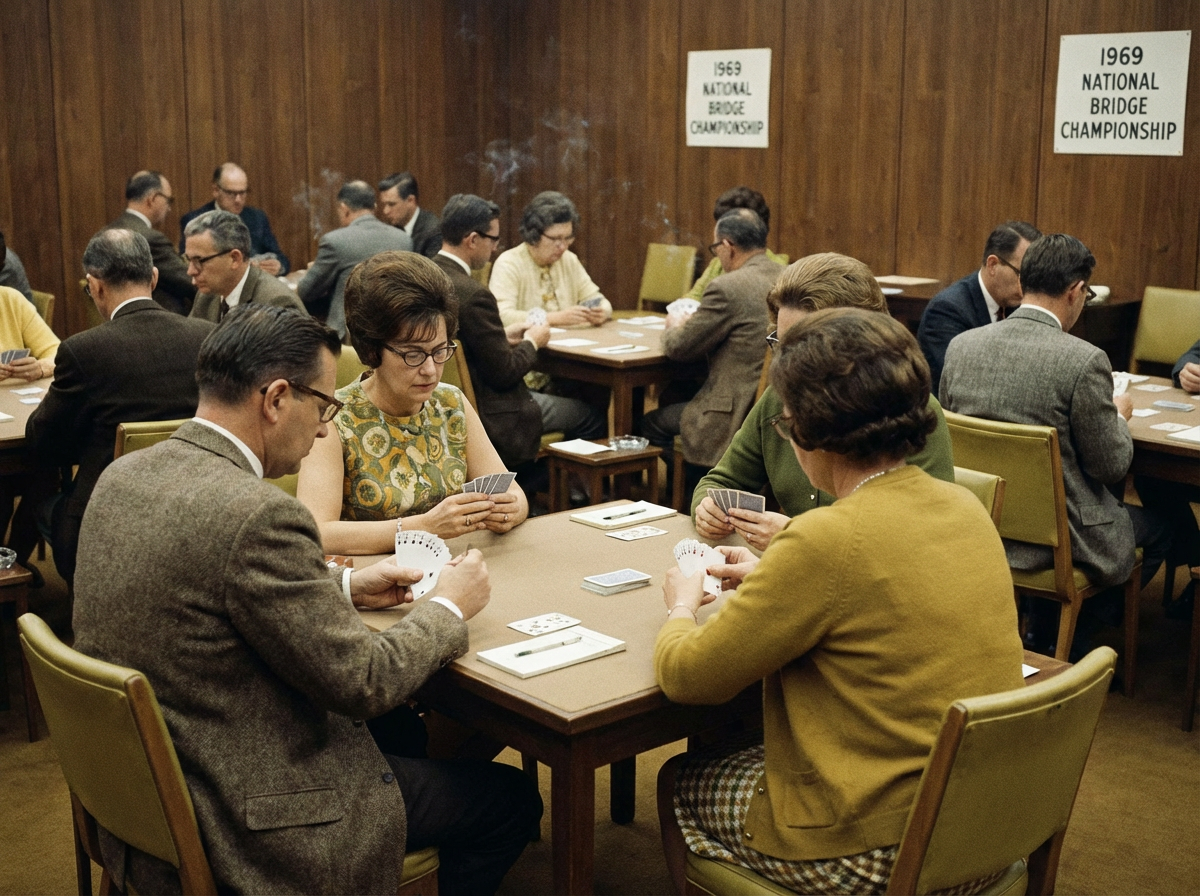
Eric Rodwell's bridge origin story begins in 1969—a pivotal year when the Taiwanese team shocked the bridge world by reaching the finals of the world championship playing what Rodwell calls "rudimentary Precision." While most players saw an upset, teenage Rodwell saw something else: proof that the game was underdeveloped.
"I realized sort of early on that the game was not developed well," Rodwell explains in the interview. "People didn't really know how to bid very well, including myself."
That honest self-assessment became his north star. Instead of accepting conventional wisdom, Rodwell embarked on what he calls "a journey"—a decades-long exploration of bidding theory that would eventually place him among bridge's most influential minds.
Why the Precision System Captured Young Rodwell's Attention
The Precision Club system—with its strong 1♣ opening and light major suit openings—represented a radical departure from Standard American bidding. For Rodwell, it wasn't just about learning a new system. It was about understanding why certain approaches worked better than others.
The Taiwanese team's success demonstrated that innovation could compete with tradition. This insight would become foundational to Rodwell's philosophy: question everything, test relentlessly, and never assume the current approach is the best approach.
The Meckwell Partnership: When Two Great Minds Created Bridge History
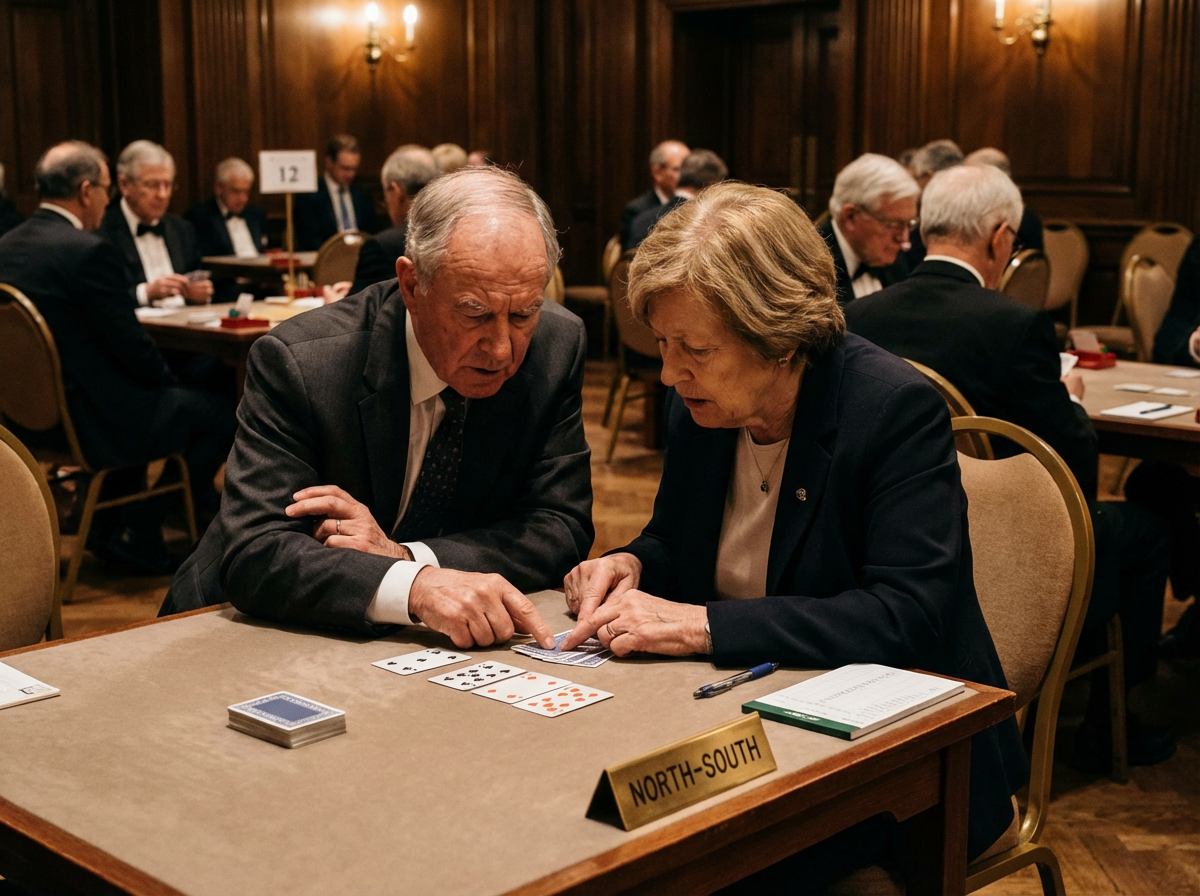
If Eric Rodwell is bridge's chief theorist, then his partnership with Jeff Meckstroth is the laboratory where theory becomes championship-winning practice. Together, they've created a legacy that extends far beyond their impressive trophy case.
"There are so many things that top-flight players play that came out of your partnership," the interviewer notes during the conversation. Rodwell's response is characteristically modest but revealing: "Yep, that's true."
The Innovations That Changed Modern Bridge
During the interview, Rodwell catalogs just a few of the conventions that bear his fingerprints:
1. Support Doubles– Perhaps Rodwell's most famous contribution, though he's quick to note: "I didn't name it Support Doubles either. That's a story for another time." This elegant convention helps partnerships determine trump suit fitness after opponent interference, solving a problem that plagued competitive auctions for decades.
2. Serious 3NT– A sophisticated tool for distinguishing between marginal and genuine slam interest, allowing partnerships to explore game versus slam more accurately.
3. Transfer Applications in Competition– Extending the transfer concept beyond standard Jacoby transfers, Rodwell developed methods for using transfers effectively in contested auctions.
These aren't just theoretical curiosities. Walk into any high-level bridge tournament today, and you'll see Rodwell's innovations at virtually every table.According to bridge historians, Support Doubles alone have become one of the most widely adopted conventions in competitive bridge.
Inside the Meckwell Defense: The System That Bears Their Names
When discussing defensive systems against 1NT openings, Rodwell reveals an interesting preference: he actually favors the Woolsey system over the Meckwell defense that carries his partnership's name.
"I play what's called Woolsey," Rodwell explains. "I play Woolsey most—it's my favorite. But I will play Meckwell when somebody plays it."
The Foundation of Rodwell's Defensive Philosophy
Regardless of which specific system he's playing, Rodwell maintains consistent principles:
Natural two-level calls: 2♥ and 2♠ over opponent's 1NT should show those suits
2♦ for diamonds + major: A two-suited tool for showing diamonds and an unspecified major
Flexibility in doubles and 2♣: These calls can vary based on partnership agreements
"The other ones seem so inferior to me," Rodwell says about alternative defensive systems, demonstrating the conviction that comes from deep theoretical understanding.
What's particularly fascinating is Rodwell's adjustment based on opponent strength: "It depends on how strong the opponent's no-trump is" for determining exactly which defense to employ. This contextual thinking—adjusting strategy based on specific conditions rather than applying one-size-fits-all solutions—exemplifies expert bridge thinking.
7 Lessons Every Bridge Player Can Learn from Eric Rodwell's Approach

Eric Rodwell's journey from curious teenager to bridge theorist offers a masterclass in skill development. Here are the key principles that have guided his remarkable career:
1. Question the Status Quo Rodwell didn't accept that "this is how bridge is played." He asked why and investigated whether better approaches existed. Apply this mindset to your own game: which conventions do you play simply because everyone else does?
2. Embrace the Journey Mindset"It's a journey, right?" Rodwell says about developing bidding theory. Excellence in bridge isn't a destination—it's a continuous process of learning, testing, and refining. Every session at the table is an opportunity for discovery.
3. Study Innovators, Not Just Champions Young Rodwell didn't just admire winning teams; he studied the systems they played. When the Taiwanese team succeeded with Precision, he learned the system to understand the underlying principles.
4. Partner with People Who Challenge You The Meckwell partnership works because both players bring theoretical rigor and creative thinking. Seek partnerships that push you to think more deeply, not just play more comfortably.
5. Build on Fundamentals, Then Innovate Rodwell's defensive philosophy maintains natural two-level calls as a foundation, then varies other elements strategically. Master the basics before attempting advanced innovations.
6. Name Recognition Doesn't Matter—Results Do Rodwell didn't name Support Doubles or the Meckwell defense. Others recognized the value of his innovations and named them. Focus on creating value, not claiming credit.
7. Adapt to Context Notice how Rodwell adjusts his 1NT defense based on opponent's no-trump range. Expert play requires reading the specific situation, not mechanically applying memorized systems.
The Role of Family: How Unconventional Parenting Created a Bridge Genius
One of the interview's most touching moments comes when Rodwell discusses his parents' influence on his career. His gratitude isn't just about their support for bridge—it's about something more fundamental.
"My mom and dad did a great job raising me," Rodwell reflects. "The main thing I'm thankful to them for is they didn't try and indoctrinate me with anything really. I was able to find my own way."
The Power of Independent Thinking
This parenting philosophy—exposing children to possibilities without imposing predetermined paths—gave Rodwell something invaluable: permission to think independently.
"Some people might not understand why that's important, but to me it's very important," he explains.
In bridge, as in life, independent thinking is the difference between following convention and creating innovation. Rodwell's parents introduced him to music and bridge, then stepped back to let him develop his own relationship with these pursuits. Both "caught on" with him deeply, but on his own terms.
This approach created a mind capable of looking at the 1969 bridge landscape and thinking, "This could be better"—then spending decades making it so.
Rodwell at the Table Today: Competing at the San Francisco NABC
The interview takes place at the San Francisco North American Bridge Championships, where Rodwell is competing in the Reisinger Swiss with a strong team including Doug Simpson, an Israeli pair, and the formidable duo of Joel Wooldridge and David Granger.
"Beautiful players," Rodwell says of his teammates, noting that Wooldridge had just won another national championship. "Very talented. And a lovely human."
The Continuity of Excellence
What's remarkable about Rodwell's continued competitive success is how it validates his theoretical approach. Unlike systems that work in theory but fail under pressure, Rodwell's innovations have proven themselves in the crucible of world-class competition.
His partnership methods with Meckstroth have accumulated multiple world championships and countless national titles. But perhaps more importantly, their innovations have been adopted by thousands of players worldwide—the ultimate validation for any theorist.
Why the Meckwell System Matters for Your Bridge Game
Even if you'll never play at Rodwell's level, understanding his innovations can transform your results. Here's why:
Support Doubles solve a universal problem: Every bridge player faces interference in competitive auctions. Support Doubles provide a elegant solution that works at any level.
Serious 3NT clarifies slam bidding: Missed slams and failed slams both stem from unclear communication. This convention creates clarity in precisely the situations where most partnerships struggle.
Defensive principles apply universally: Rodwell's preference for natural two-level calls and showing two-suited hands applies whether you're playing club bridge or world championships.
The beauty of Rodwell's contributions is their accessibility. These aren't conventions that only work for experts with perfect timing and visualization. They're structural improvements that help any partnership communicate more effectively.
The Ongoing Evolution of Bridge Theory
Rodwell's comment that "it's a journey" captures something essential about bridge development. The game hasn't reached its final form. Every generation of players continues discovering new possibilities.
Consider how far bridge has come since 1969, when "rudimentary Precision" could reach the world championship finals. Today's competitive bridge features sophisticated systems that would have been unimaginable to that era's players. Rodwell has been both witness to and architect of that evolution.
Bridge theorists continue building on Rodwell's foundation, creating increasingly refined methods for bidding, defense, and declarer play. But the fundamental approach—question assumptions, test innovations, measure results—remains the same playbook Rodwell has followed throughout his career.
Beyond Conventions: Rodwell's Philosophical Contributions to Bridge
While most players know Rodwell for specific conventions, his deeper contribution may be philosophical. He's demonstrated that:
Bridge rewards systematic thinking: Random innovation doesn't create lasting value; principled development does
Partnerships can be greater than individuals: The Meckwell partnership has achieved more than either player could have alone
Theory and practice must align: Conventions that work only in ideal situations aren't truly useful
Simplicity beats complexity: Natural calls form the foundation of Rodwell's defensive systems
These principles extend beyond bridge. They're a framework for approaching any complex intellectual pursuit.
How to Watch More Bridge Legends on Bridge Unleashed
This Eric Rodwell interview is part of Bridge Unleashed's ongoing mission to make bridge accessible, engaging, and inspiring for players at every level. Host Tracey Bauer brings together bridge legends, rising stars, and fascinating personalities to explore what makes this game endlessly captivating.
Subscribe to Bridge Unleashed on YouTube for:
In-depth interviews with world champions and theorists
Hand analysis and strategy discussions
Bridge culture, stories, and the human side of competition
Tips for improving your game at any level
Whether you're a beginner curious about the game or a seasoned player looking to understand advanced concepts, Bridge Unleashed delivers content that respects your intelligence while explaining complex ideas clearly.
Your Bridge Journey: Applying Rodwell's Lessons
After watching the Eric Rodwell interview and reading this deep dive into his innovations, what's your next step?
Start with one Rodwell innovation: If you're not playing Support Doubles, discuss adding them with your partner. This single convention can immediately improve your competitive auction results.
Adopt the journey mindset: View every bridge session as an opportunity to learn, not just to win. Ask "why" about the conventions you play and the decisions you make.
Study with purpose: Don't just play more hands—analyze the hands you play. What worked? What didn't? Why?
Find your own voice: Rodwell's parents gave him space to develop independently. Give yourself permission to question conventions, test new approaches, and develop your own bridge philosophy.
Connect with the bridge community: Join Bridge Unleashed's email list for weekly tips, strategy insights, and updates on new interviews. Learning from legends like Rodwell accelerates your own development.
Conclusion: The Enduring Legacy of Eric Rodwell
Eric Rodwell's impact on bridge extends far beyond his impressive championship record. He's changed how millions of players communicate with their partners, defend against no-trump contracts, and think about bidding theory.
But perhaps his most important contribution is demonstrating that bridge rewards independent thinking, systematic development, and principled innovation. You don't have to accept the game as you found it. With curiosity, rigor, and persistence, any player can contribute to bridge's ongoing evolution.
Watch the full Eric Rodwell interview on Bridge Unleashed's YouTube channel to hear his insights in his own words, including stories that didn't make it into this article. Then join our community of bridge enthusiasts who believe this beautiful game deserves a modern, welcoming approach.
Ready to improve your game one hand at a time?Sign up for Bridge Unleashed's free Starter Kit, a beginner learning room with seven lessons, ten videos and a two-page cheat sheet.
About the Author
Tracey Baueris the founder of Bridge Unleashed, a modern platform dedicated to growing the game of bridge through compelling storytelling, strategic education, and inclusive community building. With over 456 videos and 1.1 million Facebook views, Tracey brings bridge legends and strategy to players worldwide. Her mission: make bridge feel current, accessible, and irresistible to new generations while honoring the game's rich competitive tradition.
Connect with Bridge Unleashed on YouTube| Subscribe to the email list for weekly bridge insights.
FAQ SECTION
Question 1: Who is Eric Rodwell in the bridge world?
Eric Rodwell is one of bridge's greatest theorists and world champions, known for inventing conventions like Support Doubles and Serious 3NT. His partnership with Jeff Meckstroth (the Meckwell partnership) has revolutionized modern competitive bidding and won multiple world championships.
Question 2: What are Support Doubles and who invented them?
Support Doubles are a convention invented by Eric Rodwell that shows three-card support for partner's suit after opponent interference. When an opponent overcalls partner's opening suit bid, a double shows exactly three-card support, helping partnerships determine trump fitness in competitive auctions. This innovation has become one of bridge's most widely adopted conventions.
Question 3: What is the Meckwell defense in bridge?
The Meckwell defense is a sophisticated system for competing against opponent's 1NT openings, developed by Eric Rodwell and Jeff Meckstroth. Interestingly, Rodwell himself prefers the Woolsey system but will play Meckwell with partners who request it. Both systems emphasize natural two-level calls and showing two-suited hands effectively.
Question 4: What is Eric Rodwell's connection to the Precision bidding system?
Eric Rodwell learned the Precision system early in his career after watching the Taiwanese team reach the 1969 world championship finals using rudimentary Precision. This experience taught him that innovation could compete with traditional methods, inspiring his lifelong journey to develop better bidding theory and conventions.
Question 5: What is Serious 3NT in bridge bidding?
Serious 3NT is an Eric Rodwell innovation that distinguishes between marginal and genuine slam interest. When a partnership has established a fit and is exploring slam, a 3NT bid shows serious slam interest, while bypassing 3NT suggests mild interest. This convention helps partnerships avoid both missed slams and failed slam attempts.
Question 6: How successful is the Rodwell-Meckstroth partnership?
The Rodwell-Meckstroth (Meckwell) partnership is one of the most successful in bridge history, with multiple world championship titles and countless national championships. Beyond their competitive success, they've contributed numerous conventions and theoretical innovations that have become standard practice in modern bridge.
Question 7: Where can I watch the Eric Rodwell interview?
The complete Eric Rodwell interview is available on Bridge Unleashed's YouTube channel. The conversation covers his early bridge education, famous innovations like Support Doubles, his partnership with Jeff Meckstroth, and personal insights about his unconventional upbringing and how it influenced his approach to bridge theory.
Question 8: What can intermediate bridge players learn from Eric Rodwell?
Intermediate players can adopt Rodwell's approach: question why you play certain conventions, embrace continuous learning as a journey, study systems thoughtfully rather than just memorizing bids, and focus on building strong partnership communication. His innovations like Support Doubles and defensive principles against 1NT are accessible to players at any level and can immediately improve competitive bidding results.
